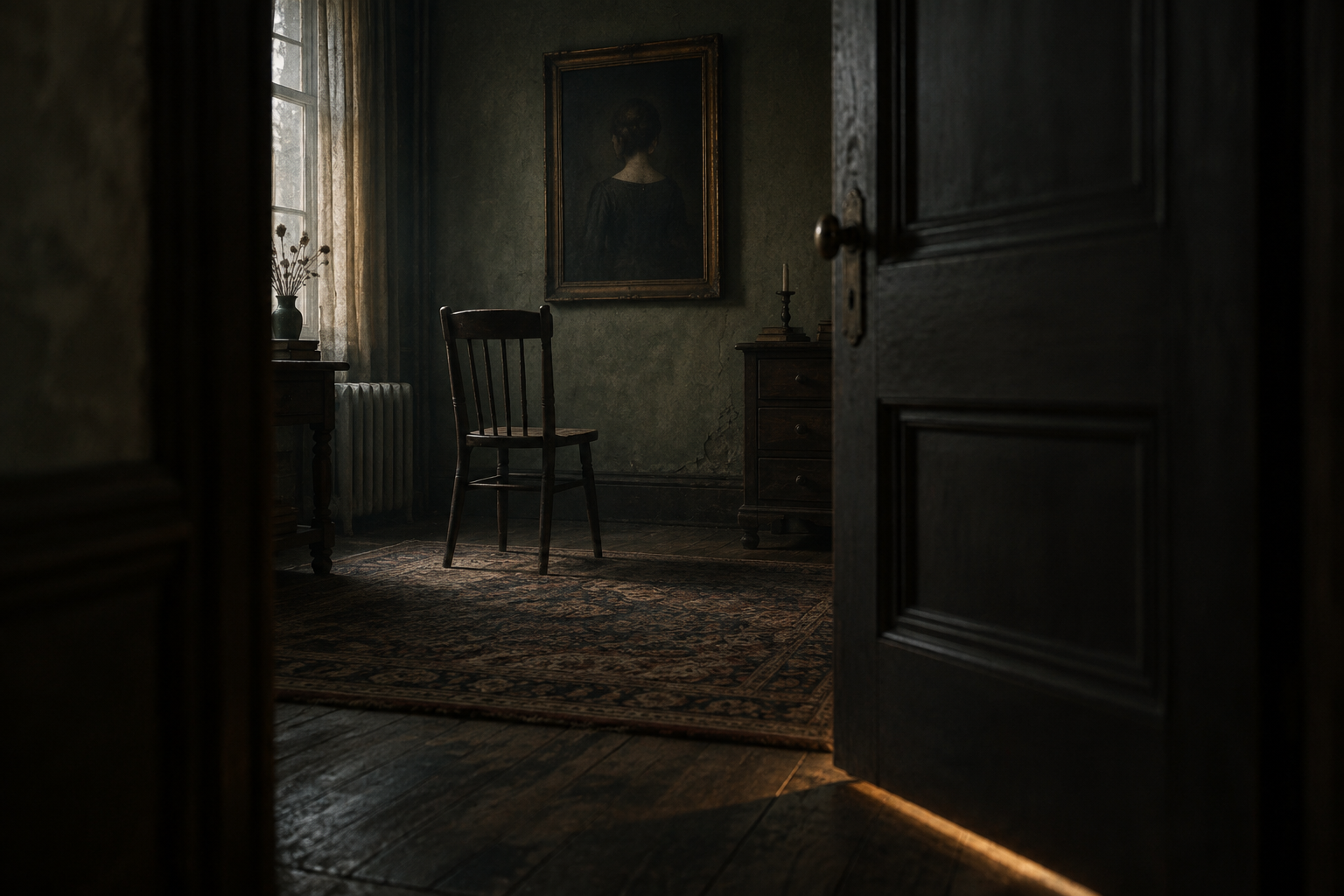
The first thing Mara found in the spare room was a blue ceramic cup. It sat on the bare floor beneath the window, though she had checked the empty room twice before carrying her boxes upstairs. A crack ran from its rim to its handle. She put it in the kitchen cupboard and locked the spare-room door again.
The next morning, the cup was back beneath the window. Beside it lay a damp wool scarf, folded into a neat square. Mara had never owned a scarf like that. She dropped both things into the rubbish bin downstairs. That evening, she heard a cupboard close in the locked room.
A pair of slippers appeared on Friday, toes pointed toward the door. On Saturday, a framed photograph rested on the floor: a woman in a garden, smiling at someone outside the frame. Mara burned the image into her memory, then carried it to the landlord. He studied it without surprise. “Things get left,” he said, and handed it back.
Mara began keeping a ledger. She wrote down each object and the hour she found it. The room supplied a brass key, a train ticket softened by age, and a small tin of buttons. Each had the same faint scent of rain and smoke. At night she dreamed of a woman counting those buttons at the kitchen table.
One morning, Mara woke knowing the woman’s name: Elise. She knew Elise had hated the blue cup and kept it anyway because it had belonged to her mother. She knew the garden in the photograph was behind a house she had never seen. When she wrote the name in her ledger, the ink feathered through the page as if the paper were wet.
She dragged a wardrobe against the spare-room door. That night, something inside knocked three times. In the morning, the wardrobe stood where it had been, but the lock was still turned from the outside. The room held no new object. For the first time, it held a smell: coffee cooling in a cup.
A week passed. Mara slept better. Then she noticed a second line in the ledger beneath the list of Elise’s things. In her own handwriting, though she did not remember writing it, were the words: blue cup, left of the window. She shut the book and put it away.
The next day, she found a damp wool scarf folded on her bed. Her hands shook as she carried it to the spare room. The door was unlocked. Inside, the floor was bare except for the blue cup, its crack running down the other side now. Somewhere in the wall, a key turned. Mara heard a knock from the hallway—three careful taps, just like her own.
Leave a Reply